How to Build Your Horse’s Confidence
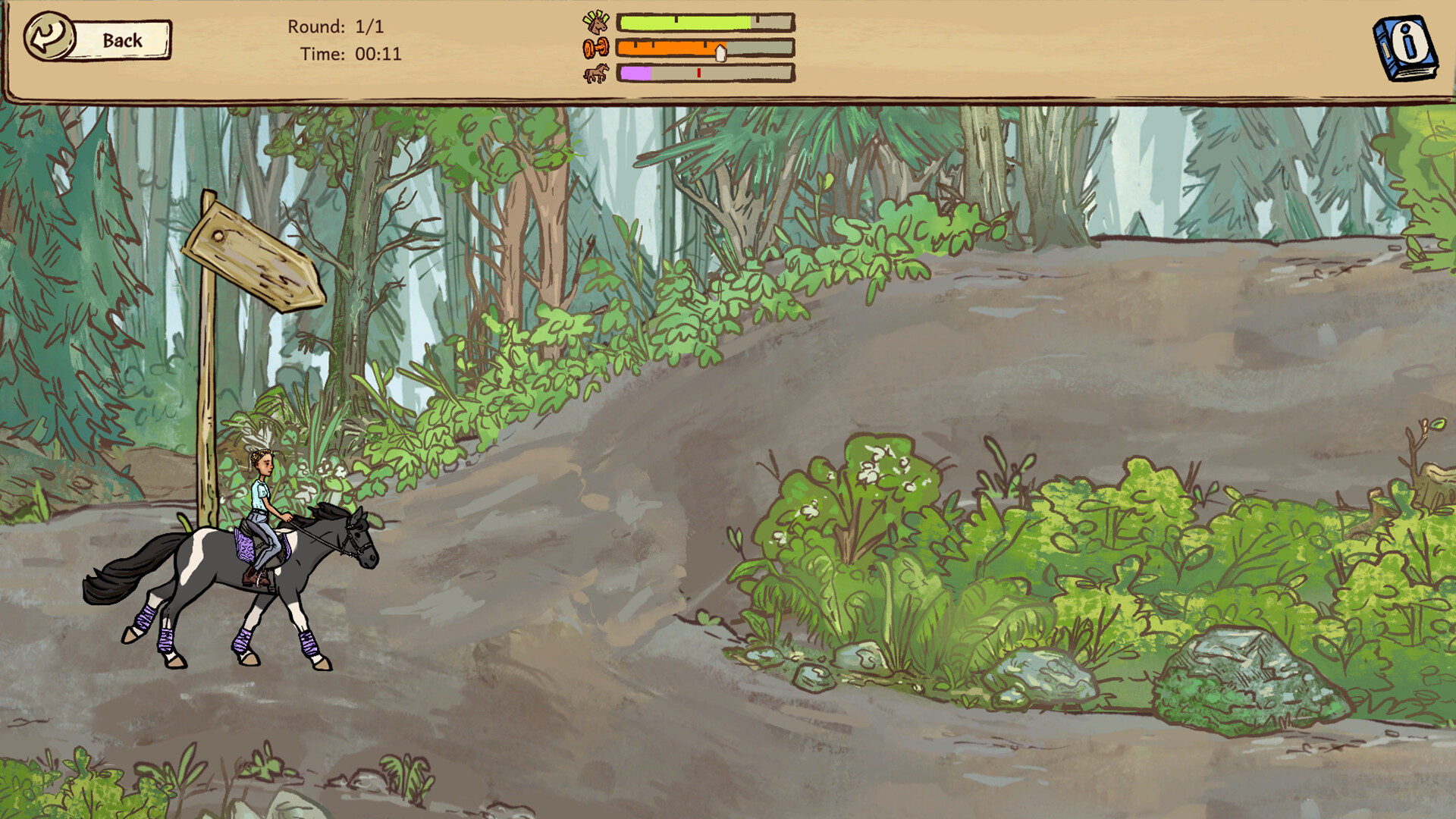
Build confidence through successful training, praise directly after requested gait changes, and Desensitization training that rewards curiosity. During desensitization, give a worried horse space and time; while riding, watch for the warning icon that appears before an unrequested gait change so you can correct it.
Work Through Desensitization at Your Horse’s Pace
- Choose the Desensitization training course to work specifically on confidence around a scary object. Make your goal a successful approach that follows your horse’s reactions, rather than simply reaching the object as quickly as possible.
- Approach the scary object while watching your horse’s reactions. Pay attention throughout the approach so you can respond to curiosity or worry as it develops, instead of concentrating only on how close you are getting.
- Praise your horse when it shows curiosity. Curiosity is the response to reward during this exercise, so use the horse’s reaction to decide when to praise rather than following a fixed rhythm.
- Give your horse space and time when it becomes worried. Pause the approach and let its reaction guide your next decision; there is no need to turn the exercise into a rush toward the scary object.
Praise Immediately After a Requested Gait Change
- Return to training you can complete successfully if your horse is struggling. Manageable practice gives you a better setting for working on successful responses without repeatedly missing obstacles or failing the exercise.
- Request a gait change and watch for your horse to make that transition. Keep your attention on its response so you are ready to praise directly after it changes gait at your request.
- Praise directly after your horse completes the requested gait change. This raises confidence; connect the praise to the response you just asked for instead of waiting until later in the ride.
Recognize the Signals and Choose Your Response
| What You Notice | How to Respond |
|---|---|
| Your horse shows curiosity while approaching the scary object during Desensitization. | Praise the curious response as part of confidence training. |
| Your horse becomes worried during the approach. | Give it space and time, and pause before continuing the approach. |
| A warning icon appears before your horse changes gait without being asked. | Correct your horse before it actually slows down or speeds up. |
| Your horse occasionally changes gait on its own despite having full confidence. | Consider its personality quirks when interpreting the behavior; an unexpected gait change alone does not prove confidence is low. |
Low-confidence horses can be harder to keep at the requested pace. Use the warning icon as a chance to respond early, while keeping successful training and well-timed praise part of your confidence routine.
Recover From Repeated Training Failures
Missed obstacles and failed training can reduce confidence further. If practice has become a string of unsuccessful attempts, return to manageable training and focus on responses your horse can complete successfully. Praise successful requested gait transitions as you work.
Treats and affectionate interactions can also help improve confidence. Include them alongside training, while keeping your attention on the actions that need a timely response: praising requested gait changes, rewarding curiosity, and giving a worried horse room to settle.